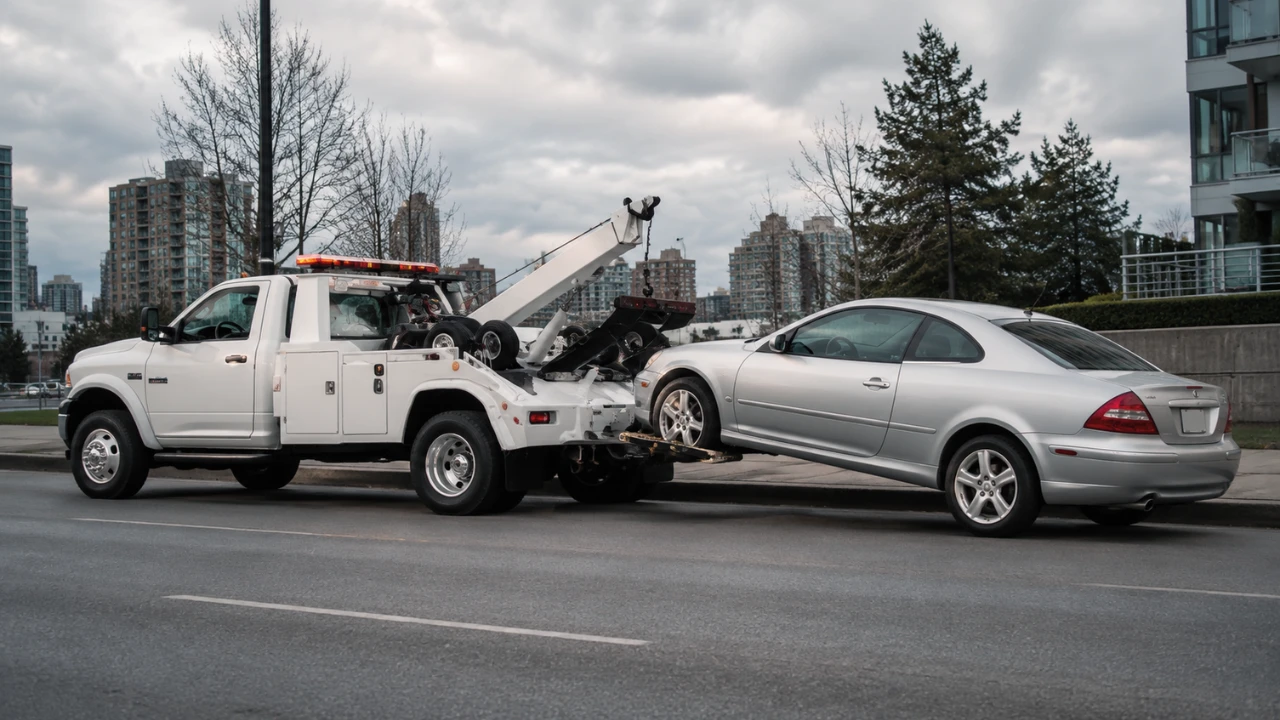
Winch-out cost depends on the vehicle’s position, ground conditions, access and equipment required to complete the recovery. A car stuck on soft ground may need to be moved to a stable position before it can be assessed or transported. That work can make the quote different from an ordinary towing job.
There is no single reliable price for every vehicle recovery. A short recovery can involve difficult access, while a vehicle stuck farther from the road may be relatively straightforward for a suitably equipped provider.
The first question to ask is what the quoted price includes: recovery only, or recovery followed by towing to another location.
Is a Winch-Out the Same as Towing?
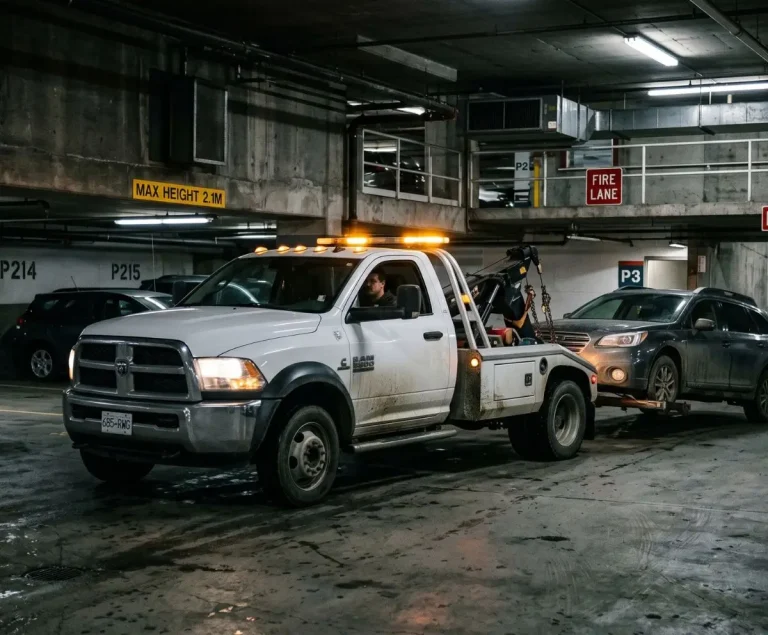
A winch-out generally involves using recovery equipment to move a stuck vehicle into a position where it can be assessed or moved normally.
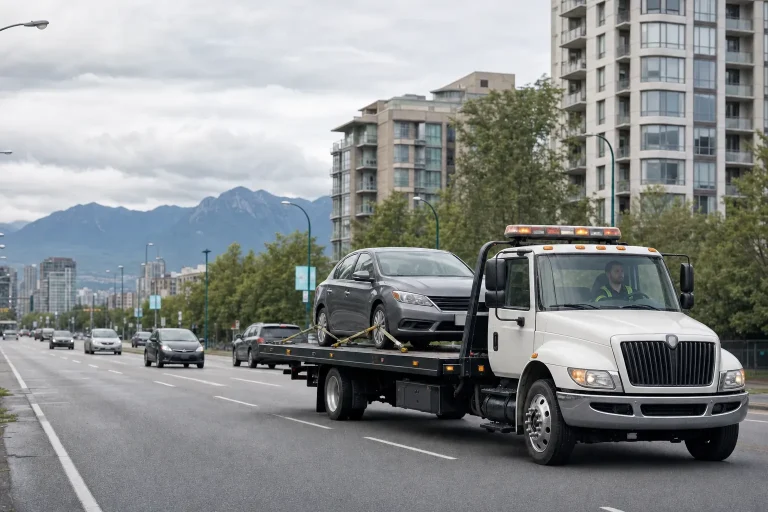
Towing involves transporting a vehicle to another destination. A single job may require both services.
For example, a car stuck beside a driveway may need recovery before it can be assessed for damage. Once it is free, the provider may determine that towing is necessary because of a damaged wheel, steering problem or another condition.
Recovering a vehicle does not establish that it is safe to drive.
Not every stuck vehicle requires winching, and not every recovery needs an additional tow. The appropriate method depends on the vehicle and the conditions at the site.
What Affects Winch-Out Cost?
Several factors can influence a recovery quote. The provider must consider the work required to reach, assess and move the vehicle, not simply the distance it needs to travel.
1. Ground Conditions and Access
The surface around a stuck vehicle can change the difficulty of a recovery.
Soft ground, mud, uneven terrain and sloped surfaces may affect the equipment and approach. Limited access can create additional challenges, particularly when there is little room for a recovery vehicle to position itself.
Two cars stuck a similar distance from a driveway may require very different amounts of work.
When requesting an assessment, describe the ground and surroundings as accurately as you can. You do not need to enter unstable ground or another dangerous area to gather measurements.
2. Vehicle Position and Condition
A vehicle that cannot gain traction may present a different recovery problem from one with collision damage or a wheel pushed out of position.
Useful details include:
- Whether the vehicle is upright and on its wheels
- Whether any wheels, steering or suspension components appear damaged
- Whether the vehicle can roll or steer, if already known
- Whether the vehicle is resting against an obstacle
- Whether there are visible fluid leaks or other safety concerns
You do not need to diagnose the problem or attempt to move the vehicle to provide these details.
If you are unsure about its condition, explain what happened and what you can safely observe.
3. Equipment and Personnel Requirements
The accepting provider determines which equipment and personnel are needed for the particular recovery.
Vehicle size, weight, position and access can affect that assessment. A tow truck that can transport a vehicle on an open road may not be suitable for every recovery situation.
Additional equipment or personnel may change the quoted scope and price.
Photographs may help explain the situation when they can be taken safely, but they do not replace the provider’s assessment.
4. Recovery Followed by Towing
Some vehicles can be assessed for continued use after recovery. Others may need transportation to a repair shop, dealership or another suitable destination.
If towing is also required, the overall quote may involve:
- Recovery work at the pickup location
- Loading and securing the vehicle
- Transportation distance
- Additional equipment needed because of the vehicle’s condition
- Access requirements at the destination
Ask whether recovery and transport are included in one price or quoted separately.
The factors behind towing charges explain why transportation costs can vary beyond the recovery work itself.
What Should You Ask Before Accepting a Recovery Quote?
A useful recovery quote should explain the proposed work and any conditions that could change the price.
Before authorizing service, ask:
- Does the quote cover recovery, towing or both? Confirm whether onward transport is part of the arrangement.
- What information is the price based on? Ask whether the vehicle’s position, condition and site access have been considered.
- How is the work charged? Find out whether the price is a fixed amount for a defined job, an estimate, an hourly arrangement or another pricing structure.
- Are additional charges possible? Ask about applicable minimums, travel, equipment, additional labour and other potential charges.
- What happens if the work changes? Ask how revised scope and pricing will be explained if the provider discovers conditions that were not apparent initially.
Some recovery situations cannot be assessed fully until a provider reaches the site. An initial estimate may therefore differ from the final price.
Where circumstances allow, confirm any revised work and applicable charges before the additional work proceeds.
Information to Have Ready When Requesting Vehicle Recovery
Accurate details help a provider understand the situation before deciding whether the work can be accepted.
Be ready to explain:
- Exact location: Address, nearby landmark or another reliable location reference.
- Vehicle information: Year, make, model and vehicle type.
- What happened: How the vehicle became stuck and whether a collision or mechanical problem occurred.
- Current position: What you can safely observe about the ground, slope, obstacles and vehicle condition.
- Access restrictions: Gates, narrow approaches, limited space or other obstacles.
- Transportation needs: Whether the vehicle may need towing afterwards and the intended destination.
If the vehicle is in a dangerous position, do not attempt to move it yourself or attach ropes, chains or recovery equipment.
For injuries, fire, leaking fuel or immediate traffic danger, call 911 first and follow emergency responders’ instructions.
How Roadside Link Handles Towing Requests Involving a Stuck Vehicle
Roadside Link Towing & Recovery coordinates towing requests with independent service providers across the Lower Mainland.
If your vehicle is stuck and may also require towing, describe the recovery situation when making the request. This helps establish whether recovery work may be necessary before the vehicle can be loaded or transported.
The information can be used to check whether a suitable independent provider is available to assess the request. Recovery work is subject to provider capability, site conditions and acceptance. Submitting a request does not confirm that a recovery can be performed.
For a vehicle that may also need emergency towing, provide the intended destination along with its current position and condition. The accepting provider confirms the feasible service, equipment, pricing terms and estimated arrival time.
Frequently Asked Questions About Winch-Out Cost
Can I get a winch-out price just by saying my car is stuck?
That is a starting point, but it is usually not enough for a dependable quote. The provider needs information about the location, vehicle condition, surrounding access and intended outcome. Some details may require an on-site assessment.
Does a recovery quote include towing afterwards?
Not automatically. Recovery and transportation may be separate parts of the job. Ask whether loading, transport and delivery to your destination are included in the proposed price.
Is a short winch-out always less expensive?
Not necessarily. The distance the vehicle needs to move is only one factor. Difficult ground, limited access, vehicle damage or additional equipment can affect the work required, even when the vehicle needs to move only a short distance.
Can the recovery price change after the provider arrives?
It may change if the actual site or vehicle condition differs from the information used for the original estimate. Ask how changes will be assessed and how revised charges will be communicated before additional work is authorized, whenever circumstances permit.